Time-slice Photography
After exploring landscape painting and noticing how quickly the colors changed at sunset, I wanted to experiment with capturing this transformation on a collage of many photographies.
After few researchs, this approach appear to be known as time-slice photography.

Result for "T"ime-slices photography"
The First Experiment
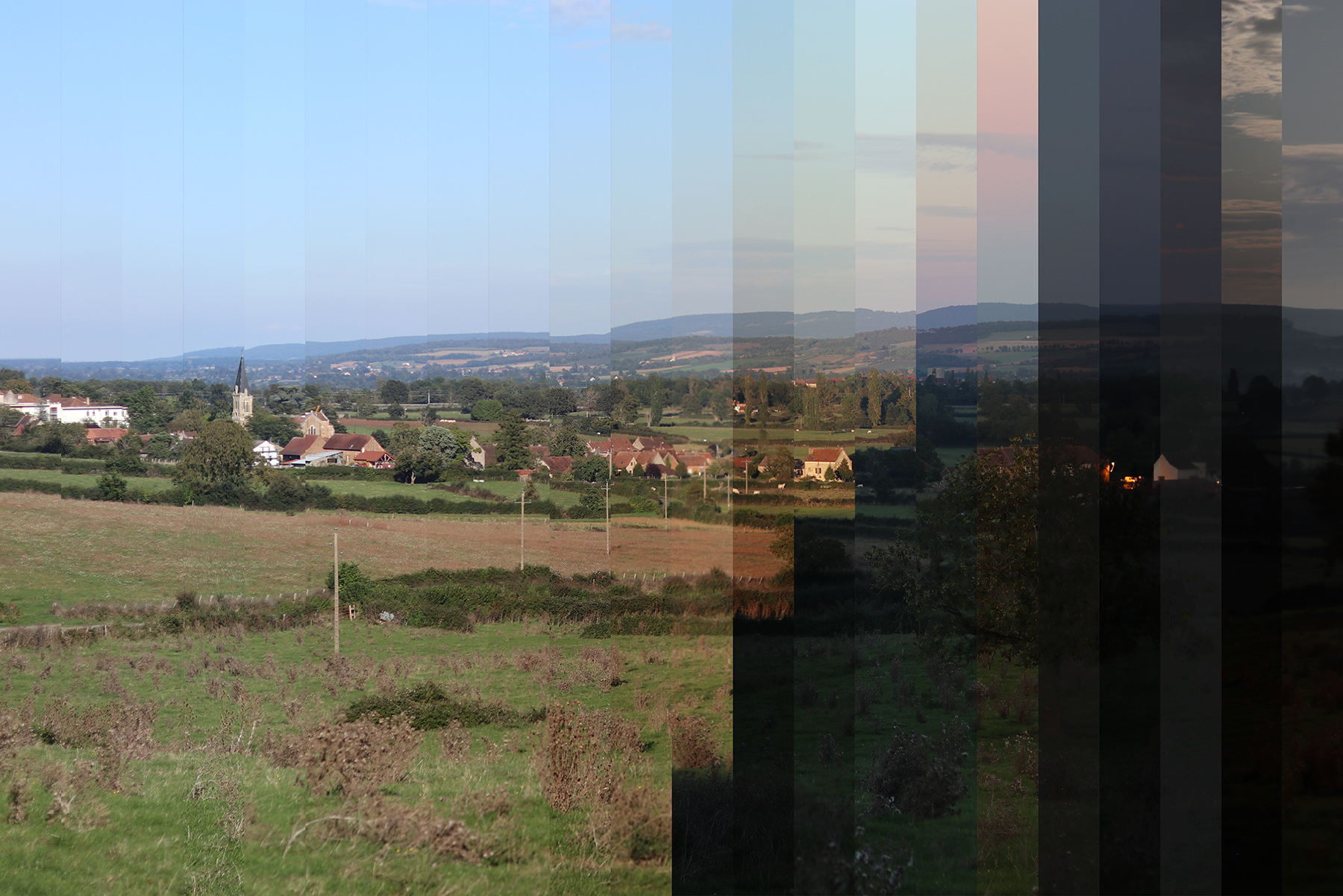
My first time-slice montage used vertical separations to capture the changing light. I instinctively chose this method, as the landscape was dominated by the horizon. By dividing it vertically, I aimed to show how the colors evolved over time. Here is the result of that experiment:
Moving Towards a More Aesthetic Approach
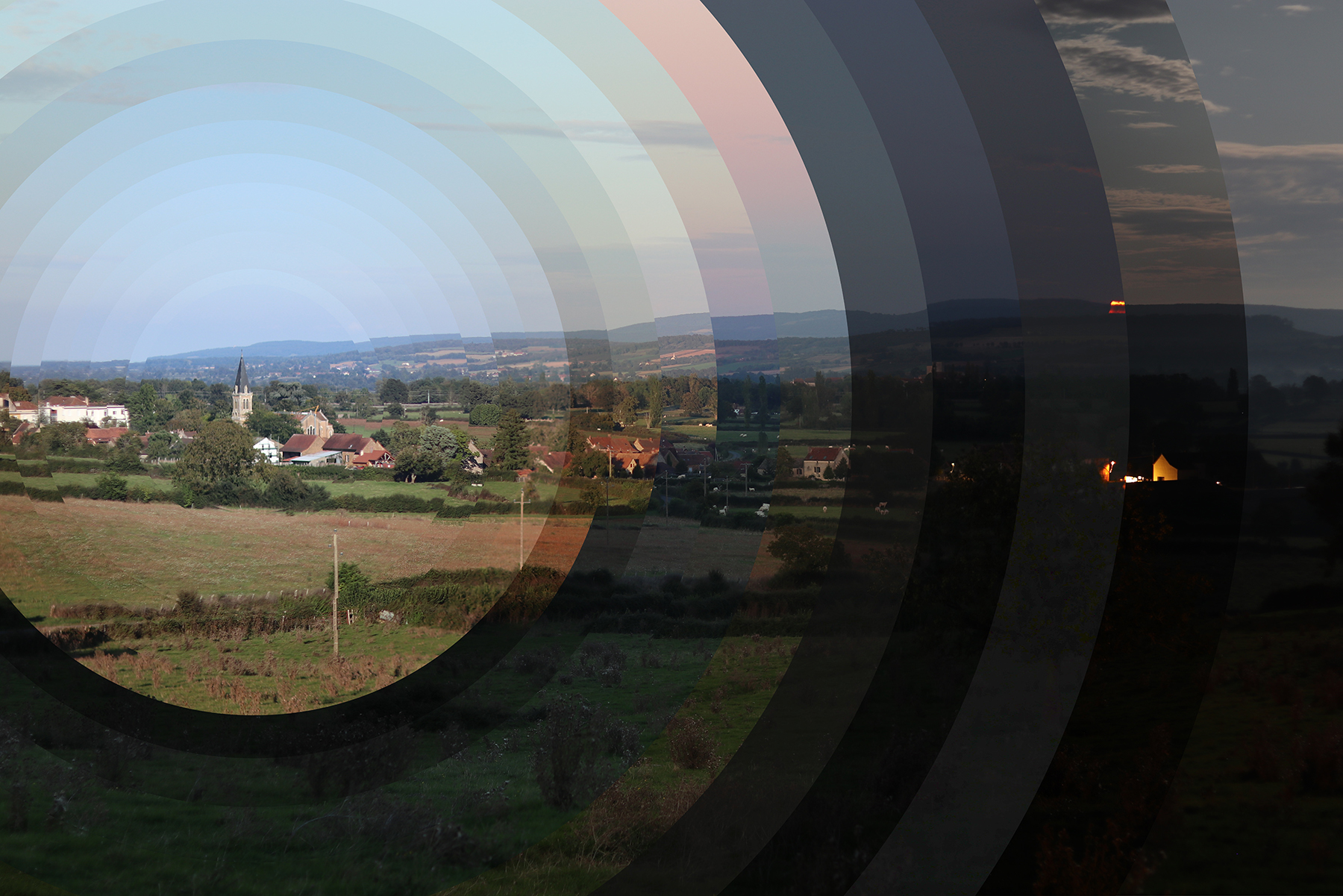
Although the vertical slices worked, they felt somewhat scientific. I wanted a more artistic representation,
one that would reflect the natural flow of the scene. Since the church tower was the focal point, I decided to
use concentric circles centered around it, symbolizing the sun and its radiating light.
This approach felt more aligned with the landscape's organic composition:
Challenges and Future Directions
Photographing the changing light came with technical challenges, like adjusting the exposure and focus to maintain consistency across the images. In retrospect, I would shorten the time interval between shots to capture more subtle gradients in a shorter window, focusing on specific aspects like the shadows or the moonrise.
Why all that?
The time-slice project was born from my desire to represent not just a single moment in a landscape, but the passage of time itself. While my first approach was rooted in painting, this exploration in photography opened new ways of thinking about how we perceive change.
In the future, I could see myself revisiting the same landscape multiple times, capturing different moments of the day or even across seasons, much like Monet with his series on the Rouen Cathedral. ...If I can hubbly make a comparison.